The metro's last-mile problem, measured station by station
The train covers eleven kilometres in eighteen minutes. The final eight hundred metres can take longer. We walked out of every station to see why.
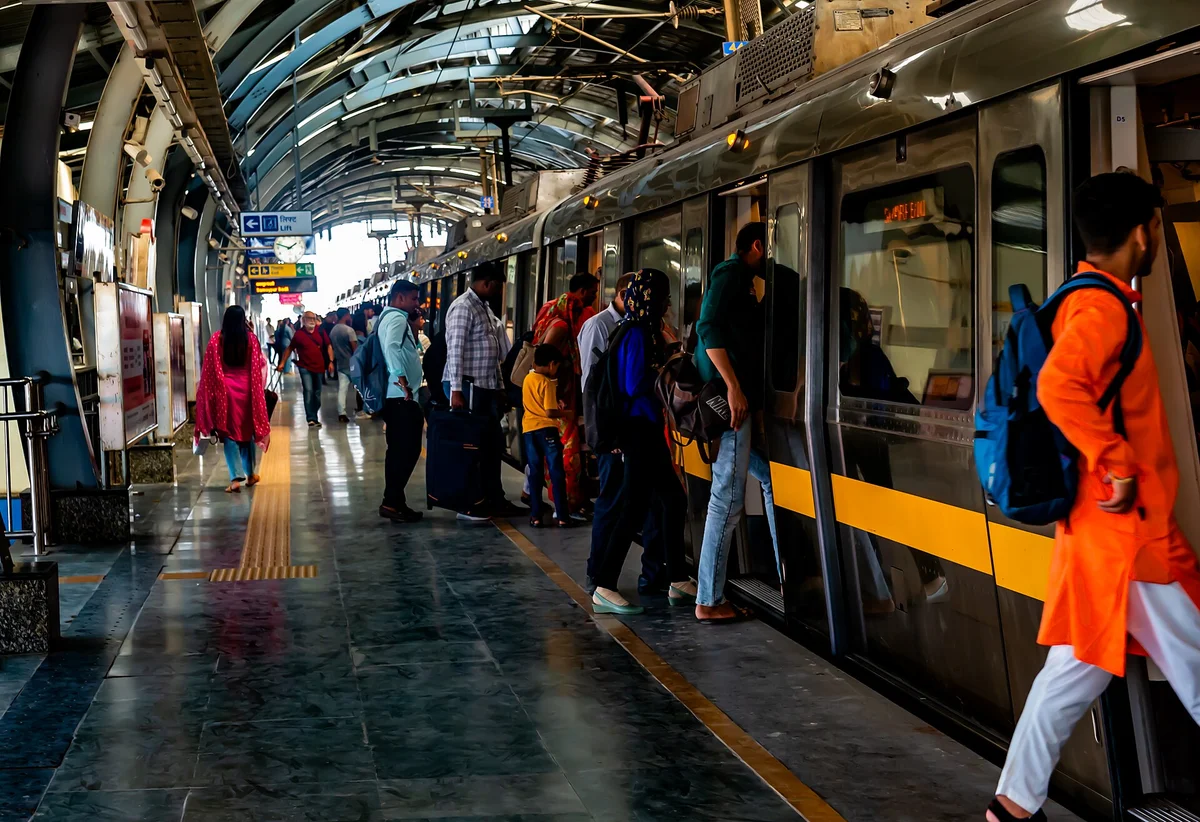
- Best last-mile time: 4 minutes; worst: 22
- Half the stations exit onto broken footpaths
- Feeder coverage still trails the network map
The metro is fast, clean and punctual — and then the doors open. At half the stations on the line, the exit delivers passengers to a footpath that ends in forty metres, a crossing without a signal, or an auto queue whose pricing floats free of any meter.
We timed the last mile at every station on the line at 9 am. The best station-to-desk time was four minutes, courtesy of a skywalk that mall developers built for their own reasons. The worst was twenty-two, most of it spent waiting to cross six lanes.
Feeder services exist on paper and intermittently in traffic. The e-rickshaw stands fill gaps where they are allowed to; where they are not, a grey market of shared autos does the same work with more honking.
Planners know the arithmetic: every rupee spent on footpaths and crossings multiplies the value of the crores spent underground. Commuters know it more simply. As one daily rider put it, adjusting her dupatta against the exhaust: 'The train is world-class. The footpath is from another world.'
Reader Comments
Comments are reviewed by our desk before they appear. Sign in with your mobile number to join the discussion.